Digital Literate and Data-Driven Decision Maker
[Acquire basic understanding of digital tools and data usage]
GenEd Capstone (T2)
Evidence for 1.1.2
GenEd Capstone: LUM123SCENCE
Rate: 4 Consistently Demonstrated Video
Subject: GenEd Capstone (T2)
Ang Capstone project na ito ay ang rurok ng integrasyon ng mga asignaturang Life and Works of Rizal, Purposive Communication, at Readings in Philippine History. Sa pamamagitan ng temang "Dugong IMBA, Dugong SORO," ipinapakita nito ang kolektibong paglalakbay ng mga mag-aaral mula sa simpleng pakikipagkapwa-tao hanggang sa malalim na pag-unawa sa kasaysayan at makabuluhang komunikasyon. Ang proyekto ay nagpapatunay na ang pagkatuto ay hindi lamang nagaganap sa loob ng apat na pader ng ITL, BPS, at MB, kundi sa pamamagitan ng kolaborasyong naglalayong magsilbing "liwanag sa dilim" para sa bata at para sa bayan.
TGED03 LIFE AND WORKS OF RIZAL (BUHAY AT GAWA NI RIZAL)
Evidence for 1.1.1
Infographics in Rizal
Rate: 4 Consistently Demonstrated PDF
Subject: TGED03 LIFE AND WORKS OF RIZAL (BUHAY AT GAWA NI RIZAL)
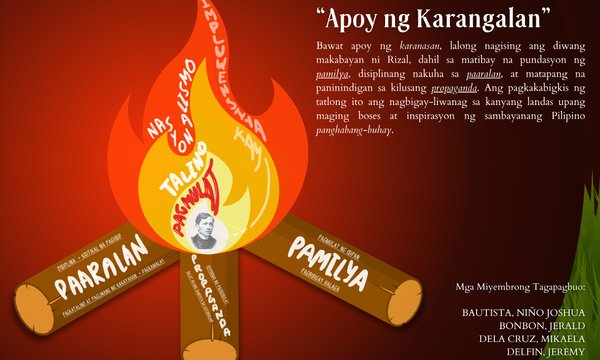
A collaborative visual output titled "Apoy ng Karangalan" (Fire of Honor). It maps out the influences on Jose Rizal’s nationalism, focusing on family, school discipline, and the Propaganda Movement as tools against corruption.
TGED05 READINGS IN PHILIPPINE HISTORY

Evidence for 1.1.3
RPH Ghibli - Group 8 (Japanese Occupation)
Rate: 4 Consistently Demonstrated PDF
Subject: TGED05 READINGS IN PHILIPPINE HISTORY
A comprehensive group presentation (64 pages) regarding the Japanese Occupation of the Philippines. It includes "Ice Breakers," analysis of 1941 reports, and a deep dive into Claro M. Recto’s defense of wartime leaders, using hypothetical comparisons to American history.
TGEDX08 DATA AND DIGITAL INTELLIGENCE
Evidence for 1.1.4
Developmental Portfolio Website
Rate: 3 Often Demonstrated Website
Subject: TGEDX08 DATA AND DIGITAL INTELLIGENCE
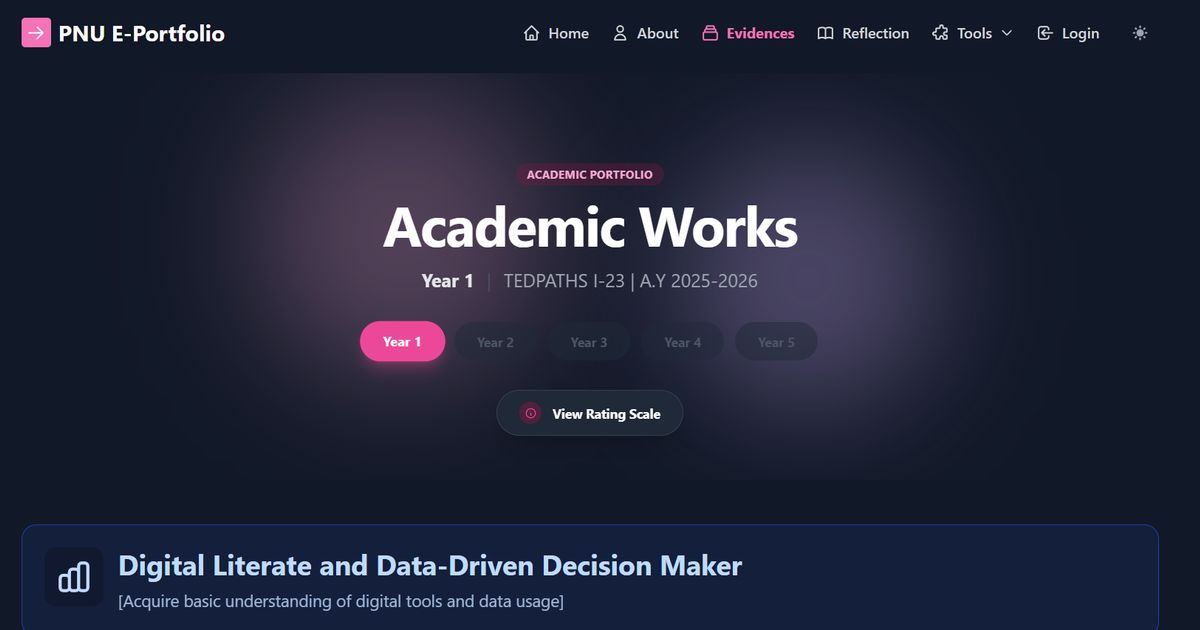
Created a website for my developmental portfolio entries.
Design Thinker and Innovator
[Shows creativity in problem-solving.]
GenEd Capstone (T2)
Evidence for 1.2.1
GenEd Capstone: LUM123SCENCE
Rate: 4 Consistently Demonstrated Video
Subject: GenEd Capstone (T2)
Ang Capstone project na ito ay ang rurok ng integrasyon ng mga asignaturang Life and Works of Rizal, Purposive Communication, at Readings in Philippine History. Sa pamamagitan ng temang "Dugong IMBA, Dugong SORO," ipinapakita nito ang kolektibong paglalakbay ng mga mag-aaral mula sa simpleng pakikipagkapwa-tao hanggang sa malalim na pag-unawa sa kasaysayan at makabuluhang komunikasyon. Ang proyekto ay nagpapatunay na ang pagkatuto ay hindi lamang nagaganap sa loob ng apat na pader ng ITL, BPS, at MB, kundi sa pamamagitan ng kolaborasyong naglalayong magsilbing "liwanag sa dilim" para sa bata at para sa bayan.
TGED03 LIFE AND WORKS OF RIZAL (BUHAY AT GAWA NI RIZAL)
Evidence for 1.2.2
Infographics in Rizal
Rate: 4 Consistently Demonstrated PDF
Subject: TGED03 LIFE AND WORKS OF RIZAL (BUHAY AT GAWA NI RIZAL)
A collaborative visual output titled "Apoy ng Karangalan" (Fire of Honor). It maps out the influences on Jose Rizal’s nationalism, focusing on family, school discipline, and the Propaganda Movement as tools against corruption.
TGEDX08 DATA AND DIGITAL INTELLIGENCE
Evidence for 1.2.3
Developmental Portfolio Website
Rate: 3 Often Demonstrated Website
Subject: TGEDX08 DATA AND DIGITAL INTELLIGENCE
Created a website for my developmental portfolio entries.
Discerning and Compassionate Person
[Demonstrates basic empathy and understanding.]
GenEd Capstone (T2)
Evidence for 1.3.2
GenEd Capstone: LUM123SCENCE
Rate: 4 Consistently Demonstrated Video
Subject: GenEd Capstone (T2)
Ang Capstone project na ito ay ang rurok ng integrasyon ng mga asignaturang Life and Works of Rizal, Purposive Communication, at Readings in Philippine History. Sa pamamagitan ng temang "Dugong IMBA, Dugong SORO," ipinapakita nito ang kolektibong paglalakbay ng mga mag-aaral mula sa simpleng pakikipagkapwa-tao hanggang sa malalim na pag-unawa sa kasaysayan at makabuluhang komunikasyon. Ang proyekto ay nagpapatunay na ang pagkatuto ay hindi lamang nagaganap sa loob ng apat na pader ng ITL, BPS, at MB, kundi sa pamamagitan ng kolaborasyong naglalayong magsilbing "liwanag sa dilim" para sa bata at para sa bayan.
TGED01 UNDERSTANDING THE SELF

Evidence for 1.3.1
Understanding the Self
Rate: 3 Often Demonstrated Reflective Essay
Subject: TGED01 UNDERSTANDING THE SELF
This work is a reflection on personal development and understanding of the self, covering various aspects such as physical, emotional, and socio-cultural development. It is based on the course Understanding the Self at Philippine Normal University. The impact of this work is on personal growth and self-awareness, which can be applied to future teaching practices.
TGEDX08 DATA AND DIGITAL INTELLIGENCE
Evidence for 1.3.3
Developmental Portfolio Website
Rate: 3 Often Demonstrated Website
Subject: TGEDX08 DATA AND DIGITAL INTELLIGENCE
Created a website for my developmental portfolio entries.
Dynamic Lifelong Learner and Leader
[Engages in self-directed learning.]
GenEd Capstone (T2)
Evidence for 1.4.2
GenEd Capstone: LUM123SCENCE
Rate: 4 Consistently Demonstrated Video
Subject: GenEd Capstone (T2)
Ang Capstone project na ito ay ang rurok ng integrasyon ng mga asignaturang Life and Works of Rizal, Purposive Communication, at Readings in Philippine History. Sa pamamagitan ng temang "Dugong IMBA, Dugong SORO," ipinapakita nito ang kolektibong paglalakbay ng mga mag-aaral mula sa simpleng pakikipagkapwa-tao hanggang sa malalim na pag-unawa sa kasaysayan at makabuluhang komunikasyon. Ang proyekto ay nagpapatunay na ang pagkatuto ay hindi lamang nagaganap sa loob ng apat na pader ng ITL, BPS, at MB, kundi sa pamamagitan ng kolaborasyong naglalayong magsilbing "liwanag sa dilim" para sa bata at para sa bayan.
TGED01 UNDERSTANDING THE SELF
Evidence for 1.4.1
Understanding the Self
Rate: 3 Often Demonstrated Reflective Essay
Subject: TGED01 UNDERSTANDING THE SELF
This work is a reflection on personal development and understanding of the self, covering various aspects such as physical, emotional, and socio-cultural development. It is based on the course Understanding the Self at Philippine Normal University. The impact of this work is on personal growth and self-awareness, which can be applied to future teaching practices.
TGEDX08 DATA AND DIGITAL INTELLIGENCE
Evidence for 1.4.3
Developmental Portfolio Website
Rate: 3 Often Demonstrated Website
Subject: TGEDX08 DATA AND DIGITAL INTELLIGENCE
Created a website for my developmental portfolio entries.
Deeply-rooted Global Citizen
[Exhibit awareness of global issues.]
GenEd Capstone (T2)
Evidence for 1.5.3
GenEd Capstone: LUM123SCENCE
Rate: 4 Consistently Demonstrated Video
Subject: GenEd Capstone (T2)
Ang Capstone project na ito ay ang rurok ng integrasyon ng mga asignaturang Life and Works of Rizal, Purposive Communication, at Readings in Philippine History. Sa pamamagitan ng temang "Dugong IMBA, Dugong SORO," ipinapakita nito ang kolektibong paglalakbay ng mga mag-aaral mula sa simpleng pakikipagkapwa-tao hanggang sa malalim na pag-unawa sa kasaysayan at makabuluhang komunikasyon. Ang proyekto ay nagpapatunay na ang pagkatuto ay hindi lamang nagaganap sa loob ng apat na pader ng ITL, BPS, at MB, kundi sa pamamagitan ng kolaborasyong naglalayong magsilbing "liwanag sa dilim" para sa bata at para sa bayan.
TGED05 READINGS IN PHILIPPINE HISTORY
Evidence for 1.5.2
RPH Ghibli - Group 8 (Japanese Occupation)
Rate: 4 Consistently Demonstrated PDF
Subject: TGED05 READINGS IN PHILIPPINE HISTORY
A comprehensive group presentation (64 pages) regarding the Japanese Occupation of the Philippines. It includes "Ice Breakers," analysis of 1941 reports, and a deep dive into Claro M. Recto’s defense of wartime leaders, using hypothetical comparisons to American history.
TGEDX02 GENDER AND SOCIETY

Evidence for 1.5.1
Interwoven Feminist Perspectives Discussion Map
Rate: 2 Occasionally Demonstrated Discussion Map
Subject: TGEDX02 GENDER AND SOCIETY
A visual discussion map created for the Gender and Society course that outlines Black, Eco, Postmodern, Queer, and Trans feminist theories and their relevance to the Philippines and the world. The map synthesizes historical context, key figures, and contemporary applications to deepen understanding of gender equity.